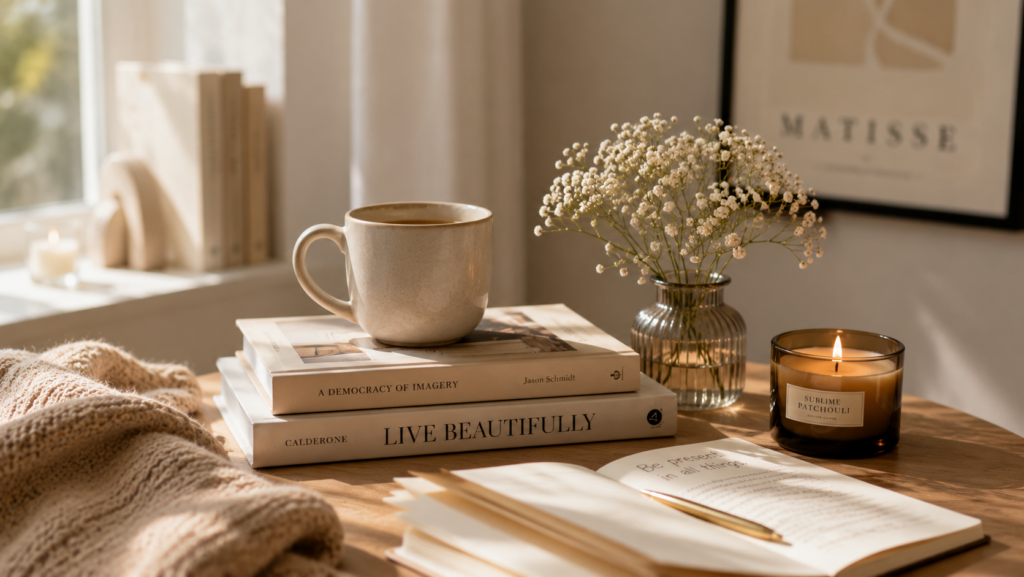
Romanticizing your life after 30 is not about pretending that bills, deadlines, grief, or uncertainty do not exist. It is a practical way to notice the life that is already happening while you work on the parts that need to change.
That distinction matters. A beautiful cup of coffee cannot solve burnout, and a candle cannot make an unhealthy relationship safe. But small, deliberate moments can interrupt autopilot. They can help you experience an ordinary Tuesday as part of your life—not merely the corridor you rush through on the way to a future milestone.
What romanticizing everyday life actually means
At its healthiest, romanticizing life is the practice of giving ordinary experiences your full attention. The NHS describes mindfulness as becoming more aware of the present moment, including your thoughts, feelings, body, and surroundings. This kind of attention can help you notice things you have begun to take for granted.
It is not a demand to be grateful all the time. It is permission to make room for pleasure, meaning, and beauty without waiting for a promotion, a relationship, a larger home, or a perfect version of yourself.
Start with an attention audit
Before buying anything, observe one normal day. Note three moments when you felt present and three moments when you disappeared into hurry, scrolling, or mental rehearsal. Then ask:
- Which part of my day already feels good?
- Which routine feels unnecessarily harsh or rushed?
- What do I reach for when I am tired: comfort, distraction, or both?
- What small change would make tomorrow easier to inhabit?
This audit keeps the practice personal. You may discover that what you need is not flowers on the table but ten phone-free minutes, softer lighting, a prepared lunch, or permission to take the long route home.
Seven ways to make an ordinary day feel more alive
1. Give one routine a beginning and an end
Choose a routine that currently blurs into the rest of the day—waking up, arriving home, or going to bed. Add a simple opening and closing cue. Open the curtains before checking your phone. Change clothes and wash your hands when work ends. Put tomorrow’s essentials by the door, then dim the lights.
The point is not to create an elaborate ritual. It is to tell your mind: this part of the day has started; now it is complete.
2. Use the things you keep saving
Drink from the glass you like. Wear the perfume on a weekday. Put the good hand cream beside the sink. Read the art book instead of treating it as decoration. If an object is too precious to survive ordinary use, decide whether preserving it is genuinely meaningful—or simply a habit.
3. Create a five-senses reset
When the day feels flat, pause for two minutes and notice one thing you can see, hear, feel, smell, and taste. This does not require a special setting. You might notice late-afternoon light, the hum of a fan, cool water, soap, and mint. Sensory attention brings you back to the place where your life is actually occurring.
4. Make maintenance feel like care
Much of adult life is maintenance: cooking, cleaning, planning, paying, replying. Instead of trying to make every task fun, remove one point of friction. Keep cleaning supplies where you use them. Play one album while preparing food. Pair an administrative task with tea and a ten-minute timer. A calmer system is often more sustaining than a prettier one.
5. Record evidence, not a performance
Photograph the soup you made, the rain on the window, or the book you finished—but you do not have to post it. Keep a private album called “ordinary life” or write one sentence each evening: “Today felt real when…” This creates a record of what nourishes you without turning the moment into content for other people.
6. Plan one small anticipation
Give the week a modest point of brightness: library night, a new walking route, breakfast on the balcony, a call with someone you miss, or an hour for a creative project. Put it on the calendar. Anticipation does not need a flight or an expensive reservation.
7. Let beauty support reality
Choose changes that make real life easier. A bowl by the door can be beautiful and stop keys from disappearing. A lamp can soften a room and make reading possible. A playlist can make the commute gentler. Beauty becomes useful when it supports how you actually live.
A no-spend romanticizing menu
- Eat one meal away from a screen.
- Open a window and notice the weather before checking notifications.
- Borrow a book or film from the library.
- Rearrange a shelf using objects you already own.
- Take a walk with no productivity goal.
- Write a real note to someone.
- Play an album from beginning to end.
- Wear an outfit you usually save for “somewhere.”
When romanticizing becomes avoidance
Pause if the practice pressures you to spend money, hide difficult feelings, make your home camera-ready, or act as though a serious problem is merely a mindset issue. Ask a grounding question: Does this help me engage with my life, or escape from what needs my attention?
If the answer is escape, take the next honest step. That may be cancelling an unnecessary purchase, having a difficult conversation, asking for help, booking a professional appointment, or simply admitting that today is hard. A meaningful life has room for delight and discomfort at the same time.
Try this seven-day experiment
- Day 1: complete the attention audit.
- Day 2: create one phone-free transition.
- Day 3: use something you have been saving.
- Day 4: take a five-senses reset.
- Day 5: improve one maintenance routine.
- Day 6: plan a small anticipation for next week.
- Day 7: review what felt genuine and keep only that.
The goal is not to perform a more beautiful life. It is to become more available to your own. Start with one moment you normally rush through and give it your attention. That is enough.
A simple filter for new rituals
When an idea looks appealing online, test it with three questions. Does it fit my real schedule? Can I do it mostly with what I have? Will it leave me more present afterward? A ritual that requires constant shopping, staging, or documentation may be creating another performance instead of a refuge.
Keep the rituals that pass the test and release the rest. Your version may be quiet and almost invisible: washing fruit when you bring it home, sitting on the front step for five minutes, choosing tomorrow’s clothes before bed, or reading while dinner cooks. Repetition gives these moments meaning; expense does not.
Frequently asked questions
Do I need an aesthetic home or routine?
No. Aesthetic choices can be enjoyable, but the practice begins with attention. A small rented room, a noisy family home, or an imperfect routine can still contain moments worth noticing. Work with your circumstances rather than treating them as a temporary life that does not count.
What if I am too tired to make things special?
Reduce the effort. Put on a lamp instead of the overhead light, eat from a plate instead of the container, or notice three breaths before sleep. If even that feels like another obligation, rest. Romanticizing life should not become a test you can fail.
How do I make the change last?
Attach one small action to an existing cue and review it after a week. For example: after closing your laptop, step outside for two minutes. Keep it only if it genuinely improves the transition. Sustainable rituals earn their place through usefulness, not novelty.