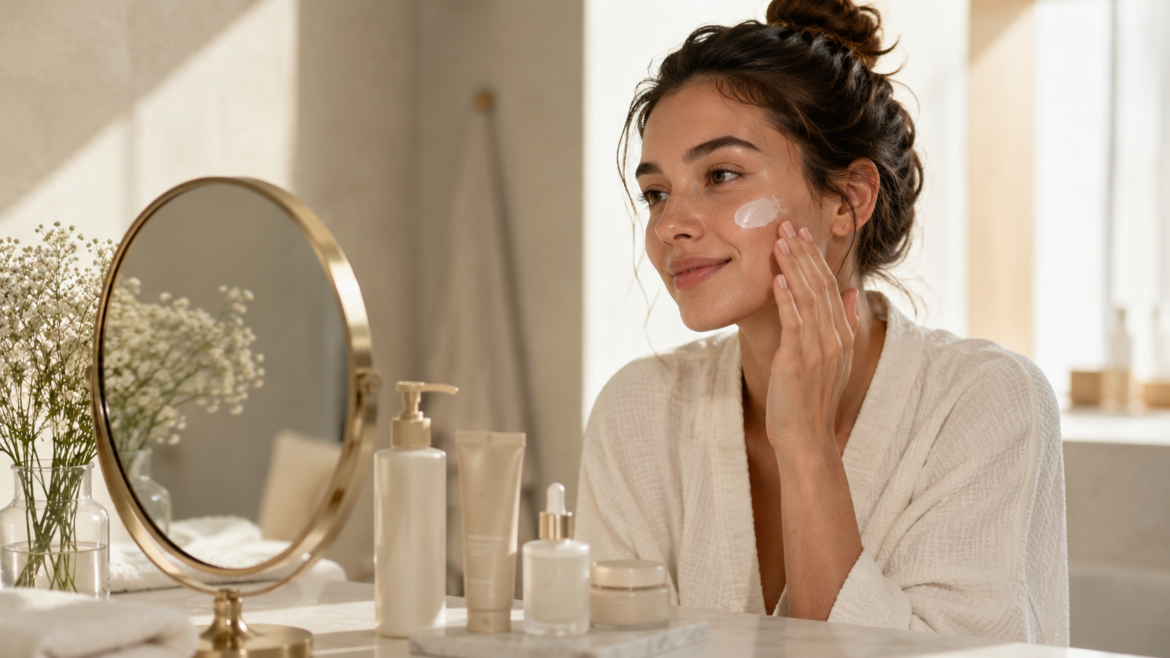

Your skincare routine does not need ten steps, a crowded shelf or a new product every week.
In your 30s, the most useful routine is usually the one that protects your skin, supports its barrier and addresses one genuine concern without creating unnecessary irritation.
For most people, that starts with three basics:
- gentle cleansing;
- moisturising;
- daily sun protection.
Everything else is optional.
This article provides general information and cannot diagnose or treat a skin condition. Persistent acne, painful inflammation, sudden changes, scarring, eczema or suspected rosacea should be discussed with a qualified healthcare professional.
The morning routine
Step 1: Cleanse gently—or simply rinse
If your skin feels oily in the morning, use a mild cleanser and lukewarm water. Avoid aggressive scrubbing, very hot water and products that leave the skin feeling tight.
People with dry or easily irritated skin may find that rinsing with lukewarm water is enough in the morning, provided makeup and sunscreen were removed the night before.
The American Academy of Dermatology recommends gentle cleansing with the fingertips rather than abrasive tools.
Step 2: Use one targeted product only if you need it
A targeted serum is not compulsory. Add one only when you can name the concern it is meant to address.
For example, some people use a vitamin C product in the morning for concerns such as uneven tone. The AAD notes that vitamin C can help with signs of skin ageing and dark spots, but the product still needs to suit the individual’s skin type.
Introduce only one new active product at a time. This makes irritation easier to identify and prevents a simple routine from becoming an uncontrolled experiment.
Step 3: Moisturise according to your skin
Moisturiser helps hold water in the skin and support comfort.
- Dry skin: consider a richer fragrance-free cream.
- Oily or acne-prone skin: consider a lighter, non-comedogenic lotion or gel-cream.
- Sensitive skin: favour a short ingredient list and avoid fragrance when possible.
- Combination skin: use a light layer everywhere and add more only where the skin feels dry.
Your skin may need a richer product in winter and a lighter one in humid weather. A routine can be consistent without being identical throughout the year.
Step 4: Apply broad-spectrum SPF 30 or higher
Sun protection is the most important morning step for preventing avoidable UV damage.
Choose a broad-spectrum, water-resistant sunscreen with SPF 30 or higher and apply it to exposed skin before going outdoors. Reapply according to the product instructions, particularly after swimming or sweating.
Sunscreen works alongside shade, clothing and other forms of sun protection—not as a licence to stay in strong sun indefinitely.
The evening routine
Step 1: Remove makeup and sunscreen
Use a gentle remover or cleanser that dissolves the products you wore during the day. A second cleanse is optional rather than mandatory: it may help after heavy or water-resistant makeup, but it should not leave the skin sore or tight.
Step 2: Cleanse without scrubbing
Wash with lukewarm water and a mild cleanser, then pat the skin dry. If cleansing causes persistent burning, flaking or tightness, simplify the routine and reconsider the cleanser.
Step 3: Add an optional retinoid carefully
Retinoids are vitamin A derivatives used for concerns including acne, mild pigmentation changes, fine lines and skin texture. They can also cause dryness and irritation, especially when introduced too quickly.
If a retinoid is appropriate for you:
- begin with a low-strength product;
- use it infrequently at first rather than every night;
- apply only the amount directed by the product or clinician;
- moisturise and reduce frequency if irritation develops;
- avoid combining several strong active products when starting;
- continue daily sun protection.
Retinoids are not suitable for everyone. The NHS states that topical retinoids should not be used during pregnancy. Anyone who is pregnant, planning pregnancy, breastfeeding, treating acne or living with rosacea, eczema or significant sensitivity should seek professional advice before use.
Step 4: Moisturise
Finish with a moisturiser suited to your skin. If an active product is irritating, applying moisturiser first—or pausing the active entirely—may be more useful than forcing the routine.
A routine for different starting points
| Skin concern | Start with | Consider later |
|---|---|---|
| Dryness or tightness | Gentle cleanser, richer moisturiser, SPF | Review fragrance and over-cleansing |
| Oiliness | Mild cleanser, light moisturiser, SPF | One targeted product for oil or acne |
| Sensitivity or redness | Fragrance-free basics, SPF | Professional advice if redness persists |
| Occasional blemishes | Non-comedogenic basics, SPF | Evidence-based acne ingredient introduced slowly |
| Uneven tone | Daily SPF and consistent basics | One targeted product after patch testing |
Age alone does not determine your skin type. Choose products for the skin you have rather than the routine someone else follows online.
How to introduce a new product
The AAD recommends testing skincare products before adding them fully to a routine because even familiar ingredients can cause irritation or allergic reactions.
A practical approach is to:
- patch test as directed;
- introduce one product at a time;
- start slowly;
- keep the rest of the routine unchanged;
- stop if the product causes persistent burning, swelling, itching or significant irritation.
Unless a product is irritating, give a simple routine time. Constantly changing products makes it difficult to know what is helping.
Signs your routine may be doing too much
More products do not always produce better skin. Simplify if you notice:
- persistent stinging or burning;
- new flaking or tightness;
- redness that does not settle;
- several exfoliating or retinoid products being layered together;
- a routine that is too complicated to follow consistently;
- buying products without a clear purpose.
Return temporarily to cleanser, moisturiser and sunscreen. If symptoms continue, seek professional advice.
A practical four-week reset
Week 1: Use only a gentle cleanser, moisturiser and morning SPF. Observe dryness, oiliness and irritation.
Week 2: Adjust the texture of the moisturiser or cleanser if necessary, but keep the routine simple.
Week 3: If your skin is comfortable, choose one concern you genuinely want to address.
Week 4: Introduce no more than one suitable targeted product and monitor the response.
This approach is less exciting than a large skincare haul, but it gives you far better information about what your skin tolerates.
Final thoughts
A useful skincare routine in your 30s is not defined by the number of products you own.
Cleanse gently. Moisturise according to your skin. Protect it from UV exposure. Add targeted products slowly and for a clear reason.
Consistency usually matters more than complexity—and comfortable skin is a better goal than following every trend.